If you picture sunset light washing over rolling ridgelines while you sip coffee on your future porch, you’re not alone. Johnson City view lots invite that Hill Country lifestyle, but the best views often sit on terrain that adds cost and complexity. With a clear plan, you can balance scenery with buildability and make a confident purchase. This guide shows you what to look for on the land, how to verify utilities and access, which restrictions matter, and how to budget before you commit. Let’s dive in.
What makes a great Johnson City view
Long-range vistas over distant ridgelines usually hold the strongest resale value. Mid-range views of oak-studded hills and neighboring pastures feel intimate and can be beautiful, but they can change if a neighbor clears or plants trees. Many treed Hill Country lots reveal bigger panoramas in winter, so try to assess views in both leaf-on and leaf-off seasons.
Orientation shapes how you live with the view. East-facing views bring soft morning light to kitchens and porches. South and west orientations catch warm evening light, which is great for sunsets but can add heat to outdoor spaces in summer. Note prevailing breezes and where shade will fall through the year so patios and pools stay comfortable.
View permanence matters. Ask whether any recorded scenic or view easements exist and study adjoining parcels to estimate future development. Conservation easements, ag exemptions, or strong architectural controls can help preserve the look and feel around you. Map your preferred sightlines from the future living room, porch, and primary suite to confirm you can place the home to capture the best axis.
Slope, soils, and drainage
Slope drives both design and cost. Gentle slopes under about 10 percent are easiest to build on and offer more options for a septic system. Slopes from roughly 10 to 20 percent may need cut and fill, stepped foundations, and longer drive approaches. Steeper than 20 percent often requires engineered foundations, terracing, and careful erosion control.
Focus on the usable building envelope, not just total acreage. A 5-acre view tract can have only a smaller pocket that truly works for a house, garage, pool, septic, and driveway. Retaining walls, rock excavation, and switchback drives add cost, so ask local builders for ballpark site-prep pricing on similar Johnson City lots.
Expect limestone and caliche. Shallow soils over rock can limit septic drainfield options, and hard rock can increase trenching or pier costs. If you see sinkholes, voids, or pitted limestone, request a geotechnical and karst evaluation before you buy. Plan for a geotechnical report, a septic soil evaluation, and, if off city services, a preliminary probe for bedrock depth.
Drainage tells the story of the land. Walk natural swales and ephemeral channels to avoid placing improvements in obvious flow paths. Steeper ground needs strong erosion controls during construction and stable vegetation after. Mature oaks and junipers frame views beautifully, but removal can be limited by deed rules and should be balanced with wildfire defensible-space planning.
Utilities, access, and internet
Water is first. Inside Johnson City limits, some lots may access municipal water. Many parcels around the city rely on a private well or a water supply corporation. Confirm exact service areas, connection eligibility, and fee schedules before you write an offer.
Wastewater outside sewer service will be on-site septic. Design and setbacks are governed by state on-site sewage rules and local permitting. Identify a reasonably level, well-drained area for a drainfield during your site walk and verify that your preferred house pad does not crowd required separations.
Electric service often comes from an area cooperative such as Pedernales Electric Cooperative. The distance from the nearest line, terrain, and transformer needs can drive line-extension costs. Get a written estimate from the provider and include it in your budget.
Expect propane, not natural gas, on rural lots. This supports cooking, heating, and backup generators. For telecommunications, cell coverage varies in hilly terrain. Test multiple carriers on-site and confirm fixed wireless or satellite options if you need reliable home office speeds.
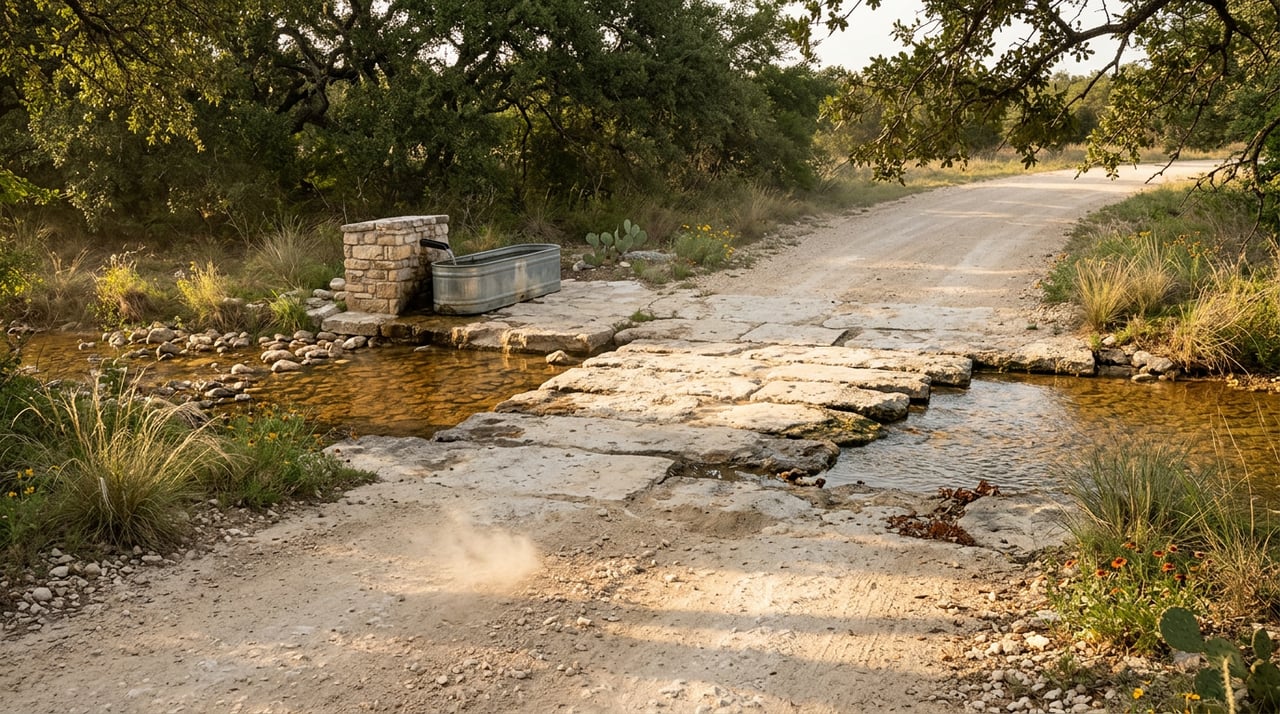
Access and maintenance rules matter. Confirm whether your road is county maintained, private with a recorded maintenance agreement, or an easement across another parcel. Note any culverts or low-water crossings and who is responsible for upkeep.
Legal checks, permits, and restrictions
Start with the records. Pull the deed, subdivision plat, and any restrictive covenants from the Blanco County Clerk. Look for building envelopes, setbacks, recorded easements, and any no-build areas. Ask a title company for a preliminary report to uncover liens, mineral reservations, or unrecorded easement references.
Expect common Hill Country covenants. Many communities set minimum home sizes, exterior materials, and design review processes. Some limit tree clearing, regulate outbuildings and fence types, or set impervious cover maximums that affect pool and driveway planning. Short-term rental rules vary by subdivision, so verify if nightly rentals are allowed or restricted.
Check environmental and floodplain status. Review FEMA flood maps for any designated floodplain on or near the parcel. In karst areas, additional protections for groundwater can shape septic design and placement. These factors can affect timelines and engineering scope, so surface them early.
Confirm permit jurisdiction. Inside city limits, Johnson City issues building and related permits. Outside city limits, Blanco County oversees key approvals, including on-site sewage facilities. Septic rules follow state standards, and well drilling follows state and local groundwater guidelines. Plan your sequence so permits, septic design, and utilities can move together.
Your due-diligence game plan
Pre-offer research
- Pull the deed, plat, and all covenants from the county clerk and read every exhibit.
- Order a preliminary title report to confirm easements, liens, and mineral reservations.
- Verify legal access and who maintains the road.
- Confirm water options: city service area, water supply corporation capacity, or well feasibility.
- Ask the seller for any septic, soil, well, survey, or utility estimates on file.
- Review FEMA flood mapping for the parcel.
- Call the local electric co-op for service availability and line-extension estimates.
- Check internet and cellular providers for the exact address or coordinates.
- Study aerials and topo alongside the plat to spot easements and likely house pads.
On-site walk checklist
- Stand where the living area would be and photograph 360 degrees at multiple times of day.
- Walk potential house pad locations and note slope class and any exposed bedrock.
- Identify likely septic areas and avoid obvious drainage paths.
- Mark distance to the nearest power pole and observe road conditions.
- Locate utility easements and think through how they affect view and building.
- Listen and look for noise, lights, smells, or seasonal uses on adjacent tracts.
- Test cell calls and speeds with at least two carriers.
- Take labeled photos and note GPS points for key features.
Professional team to engage
- Buyer’s agent experienced in Hill Country land to coordinate due diligence.
- Surveyor to confirm boundaries, easements, and produce topo if needed.
- Civil or geotechnical engineer for slope stability and foundation recommendations.
- Licensed septic designer for on-site evaluation and preliminary layouts.
- Well driller or hydro specialist to advise on depth, yield, and costs if a well is needed.
- Local builder to price site work, driveway, and utility trenching.
- Arborist or wildfire consultant if mature trees or high fire risk are present.
- Title company or real estate attorney to review covenants and encumbrances.
Contract protections
- Include contingency periods for survey, septic feasibility, water testing, and a geotechnical report.
- Request seller disclosures and any HOA documents or meeting notes.
- Budget with a cushion for line extensions, rock excavation, and erosion control.
Budget and timing reality
Site work and access can be a major line item. Modest grading and a short driveway may be in the low tens of thousands. Longer, steeper drives with retaining walls and rock excavation can exceed $50,000 to $150,000. Get multiple local quotes tied to your exact layout.
Septic systems vary by soil and design. Budget roughly $10,000 to $40,000 or more, especially if rocky conditions push you to advanced systems. Well drilling costs range widely with depth and geology, from several thousand to tens of thousands, so rely on nearby well logs and driller quotes.
Electric service costs depend on distance and terrain. Small connections can be modest, but long line extensions and transformers can reach into the tens of thousands. Permits for building and septic can take weeks to months depending on jurisdiction and season, so build that into your timeline.
The key tradeoff is simple: the more dramatic the view, the more likely you’ll face slope, rock, and utility complexity. With documented feasibility and the right team, you can enjoy the scenery without surprises.
How we help you buy with confidence
You deserve a Hill Country view without the guesswork. As a boutique brokerage with deep land and acreage experience, we help you weigh view quality against buildability, confirm utilities and access, and surface the true costs before you commit. Our team coordinates site walks with trusted builders, septic and well experts, and engineers so you leave the lot with real numbers and a clear plan.
From pulling plats and covenants to lining up electric co-op estimates and permit steps with Johnson City or Blanco County, we keep the process organized and low stress. If you are considering a view lot in or around Johnson City, let’s talk through your goals and design vision and build a due-diligence path that protects your budget and your view.
Ready to explore lots with a clear plan? Reach out to CC Herber Co., Real Estate to get started.
FAQs
What should I prioritize when evaluating a Johnson City view?
- Focus on long-range sightlines, orientation for daily light, and the ability to place the home to capture your preferred view axis while keeping septic and driveway needs feasible.
How do I confirm water for a Johnson City view lot?
- Verify whether the parcel is inside Johnson City’s water service area; if not, check availability with any local water supply corporation or plan for a private well with driller input.
How steep is too steep to build in Blanco County?
- Gentle slopes under about 10 percent are simplest; 10 to 20 percent adds engineering and cost; over 20 percent often requires specialized foundations, terracing, and careful erosion control.
What permits and approvals will I need before building?
- Expect building and septic permits from either Johnson City or Blanco County depending on location, with on-site sewage following state rules and wells subject to state and local groundwater guidelines.
What contingencies should I include in my offer on a view lot?
- Include time for a new survey, septic feasibility, water well evaluation, electric line estimate, and a geotechnical report, plus review of recorded plats, covenants, and easements.