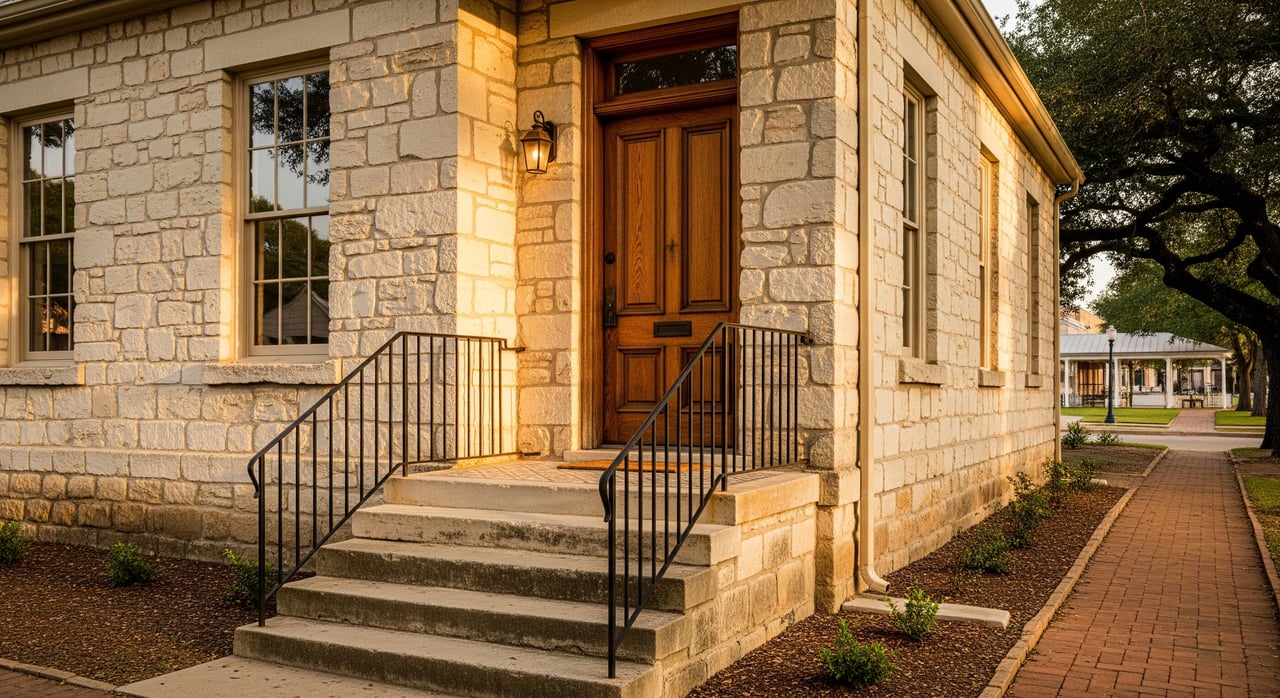
Thinking about listing a home or storefront near the Square in Blanco? Before you repaint the porch or swap the windows, it pays to know whether your property is considered historic locally or listed at the state or federal level. Buyers will ask about what they can change, and you want clear answers. In this guide, you will learn how to confirm a property’s status, what projects usually need review, and how to plan your timeline so your sale stays on track. Let’s dive in.
What “historic” really means
Historic status can mean different things. A local historic district is created by a city or county ordinance and usually controls exterior changes through a review board. By contrast, a National Register of Historic Places listing is an honorary federal designation that does not by itself restrict a private owner unless federal funding, permits, or licenses are involved. Understanding this difference helps you set the right expectations with buyers and contractors.
If you are near Blanco’s Square or along a prominent corridor, start by confirming whether a local overlay applies. Local regulations, not federal honors, usually determine if you need approval for exterior work. That clarity will shape your pre-listing plan and your timeline to market.
Step 1: Confirm your property’s status
Check local maps and the code
Begin with the City of Blanco. Ask the City Secretary or Planning and Zoning staff for any adopted historic district map, overlay, ordinance, and design guidelines that could apply to your address. If you do not find maps online, request them directly from City Hall. If your property sits outside the city limits, contact Blanco County offices to see if the county has any applicable overlays or advisory review processes.
Check National Register and state listings
Search the National Register database to see whether your property or a nearby district appears at the federal level. Then check the Texas Historical Commission’s resources for Blanco County to identify recorded properties or district nominations. These sources help you understand context and documentation that may also support your marketing.
Verify with appraisal and land records
Pull your parcel data from the Blanco County Appraisal District and review deed or plat records with the County Clerk. Recorded documents sometimes reference overlays, easements, or restrictions. Keeping these materials handy will make it easier to answer buyer questions.
Get written confirmation
Request written confirmation from city or county staff showing whether your parcel sits inside a historic overlay. Ask for the ordinance citation and any design guidelines that apply. Also request any recent approvals or denials for your property or immediate neighbors so you understand what the review body has allowed in the past.
Step 2: Know when to coordinate with review
Who to contact
If a local historic district exists, the city typically has a Historic Preservation Commission, a review board, or the planning commission that oversees exterior changes. If your property is in the county, there may be an advisory group or no formal review board. When in doubt, ask the City Secretary or Building Official who handles approvals.
When to reach out
- Before listing if you plan visible exterior work, such as changing paint, siding, windows, porches, signage, or significant landscaping like tree removal. Some buyers assume they can remodel freely. It is better to confirm first and either obtain approvals or disclose the rules.
- Before submitting building permits. Many cities require a Certificate of Appropriateness, often called a COA, before issuing a permit for exterior work inside a local district.
- Before demolition or substantial alteration. Demolitions and large additions typically require formal review and sometimes a delay period.
How long it can take
Preliminary guidance can be quick, often same day to 1 or 2 weeks depending on staff. Formal review or a COA may take 2 to 8 weeks, especially if the commission meets monthly and you must get on an agenda. Permits after a COA vary by project scope. Build extra time into your sale timeline if any exterior work is planned or likely to be requested by buyers.
What you will need to apply
Most boards ask for a completed application, photos of existing conditions, project drawings, a site plan, material samples, color chips, and owner authorization. Fees and submittal procedures vary. Ask staff for the current checklist and meeting schedule so you can time your listing launch.
Step 3: Know which changes need review
Changes that usually require approval
- Demolition of any historic structure or visible portion of a building.
- New construction, infill homes, additions that alter massing or rooflines, and changes visible from the street.
- Alterations to primary facades: windows, doors, porches, storefronts, and siding.
- Replacing major materials, such as roofing type, siding type, or exterior trim.
- Paint color changes where local guidelines regulate colors, especially for commercial or character-defining buildings.
- New signage, exterior lighting, awnings, and commercial storefront features.
- Fencing and visible site changes that affect historic setting, including driveways or major tree removal in some places.
- Rooftop or ground mechanical units that are visible from public streets.
Changes often approved administratively
- In-kind repairs using matching materials.
- Interior work, unless it affects exterior character.
- Routine maintenance that does not change design, materials, color, or finish.
Standards you can expect
Local criteria often focus on compatibility. Expect emphasis on scale, materials, massing, and setbacks, along with a preference to retain character-defining features like porches and window patterns. Many jurisdictions look to the Secretary of the Interior’s Standards for Rehabilitation as a benchmark. New additions typically must be compatible yet clearly differentiated from the original building.
Smart pre-listing moves for sellers
Gather the right documents
Collect the official district map, the ordinance, and any design guidelines that apply. Ask staff for copies of recent Certificates of Appropriateness affecting your property. Pull recent permits from the building department and keep your appraisal record, survey, plat, and deed in one file.
Make informed renovation choices
If you plan exterior updates to boost value, confirm up front whether a COA or permit is required and how long the process takes. If a buyer is likely to request certain changes, consider seeking a pre-approved COA to reduce uncertainty. Having approvals in hand can be a confidence builder for qualified buyers.
Disclosures and buyer communication
Disclose any known historic-district status and material restrictions on your seller’s disclosure forms as required in Texas. Provide copies of the ordinance, guidelines, and past approvals or denials to prospective buyers. Clear information helps prevent surprises during the option period or prior to closing.
Marketing with care
Highlight protected features as part of your story, such as original woodwork, historic porches, or a well-preserved storefront. Avoid implying rights you do not have, like promising an easy conversion or a large addition without confirming feasibility. If incentives or grants might apply, note the possibility but verify eligibility before advertising benefits.
Budget time and costs
Plan for potential application fees, the cost of drawings or material samples, and additional time for review. Large or contested proposals, such as demolitions or major additions, can extend timelines and increase costs. Building a realistic schedule helps keep your sale momentum steady.
Consult experts early
Consider speaking with a preservation consultant, an architect experienced with historic work, or an attorney for complex projects. City planning staff and the Texas Historical Commission can also provide helpful guidance on process and likely outcomes. Early input can save you time and money.
Quick seller checklist
- Confirm local status with the City of Blanco or Blanco County and get written proof of your parcel’s standing.
- Download or request the district map, ordinance, design guidelines, and any COAs tied to your property.
- Review your appraisal record, deed, survey, and recent permits.
- Identify any exterior changes you plan before listing and ask if a COA is required.
- If likely buyer requests are predictable, consider pursuing a pre-approved COA.
- Prepare a disclosure packet with relevant documents for buyers and their agents.
- Build time into your sale plan for review and permitting.
- Consult professionals if your project involves demolition, additions, or specialized materials.
Common pitfalls to avoid
- Assuming a National Register listing limits your options. Local ordinances usually control alterations for private owners, not federal listings.
- Relying on verbal assurances. Ask for written confirmation of district boundaries and approvals or denials.
- Expecting uniform rules across Texas. Each city or county may have different procedures, timelines, and criteria.
- Overlooking appeal timelines. Most ordinances include an appeals process, which can affect closing dates.
Local and state resources to start with
- City of Blanco: City Secretary, Planning and Zoning, and the Building Department for maps, ordinances, guidelines, meeting schedules, and COA forms.
- Blanco County: County Clerk and Appraisal District for property records, plats, and tax information.
- Local historical or preservation groups in Blanco County for context and history.
- Texas Historical Commission for statewide technical guidance and National Register information.
- National Park Service for National Register information and the Secretary of the Interior’s Standards for Rehabilitation.
Selling near the Square in Blanco can be a strong story for the right buyer. By confirming status early, planning your improvements, and preparing a clean disclosure package, you help buyers feel confident and keep your transaction moving. If you want a tailored plan that aligns with your goals and timeline, we are ready to help.
Ready to talk through your next steps? Schedule a Consultation with CC Herber Co. for locally grounded guidance and a smart, market-ready strategy.
FAQs
Does National Register listing restrict changes to my Blanco home?
- A National Register listing is honorary for private owners and does not by itself restrict changes unless federal funding, permits, or licenses are involved. Local ordinances are what typically regulate exterior work.
What is a Certificate of Appropriateness in Blanco?
- A COA is a local approval that confirms proposed exterior changes are compatible with the district’s guidelines. Many cities require a COA before issuing building permits for work in a historic district.
How long does historic review take before listing a property?
- Initial staff guidance may be same day to 1 or 2 weeks. A formal COA can take 2 to 8 weeks, depending on meeting schedules and the complexity of your project.
Which exterior updates can I do without approval in a district?
- Routine maintenance and in-kind repairs that match existing materials are often allowed with administrative or staff approval. Confirm specifics with the local planning office before starting work.
Can I repaint or add a sign near the Square?
- Paint color changes and new signage may require review, especially for storefronts or character-defining buildings. Ask for the local guidelines and confirm whether a COA is needed.
What if I plan to demolish a shed or add an addition?
- Demolition and visible additions almost always trigger review and can include delay periods. Contact the local review body early to understand requirements and scheduling.